

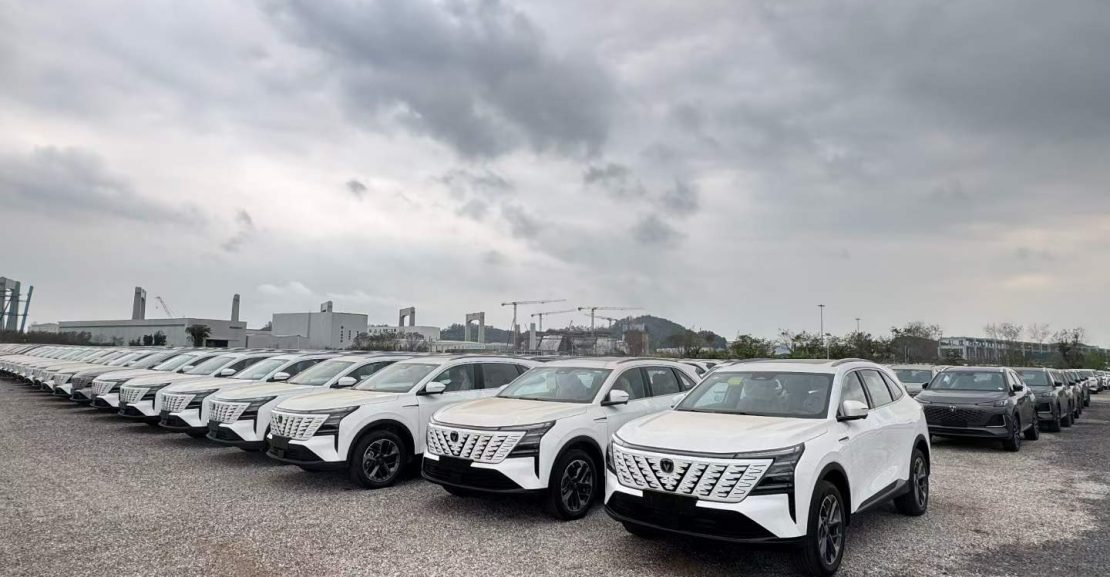
China has become one of the most important sources of electric vehicles for international buyers. From affordable compact EVs to premium electric SUVs, plug-in hybrids and extended-range electric vehicles, overseas dealers and individual buyers now have access to a much wider selection of vehicles from the Chinese market.
The used electric vehicle market is particularly attractive.
Compared with buying a new vehicle, a used EV from China can offer a significantly lower purchase price while still providing modern battery technology, intelligent features, comfortable interiors and competitive driving range.
However, importing a used electric car from China involves much more than simply finding a low-priced vehicle online.
Buyers need to consider the vehicle’s actual condition, battery health, accident history, export eligibility, documentation, payment method, shipping arrangements and the import regulations of the destination country.
This guide explains how to import used electric cars from China in 2026, step by step.
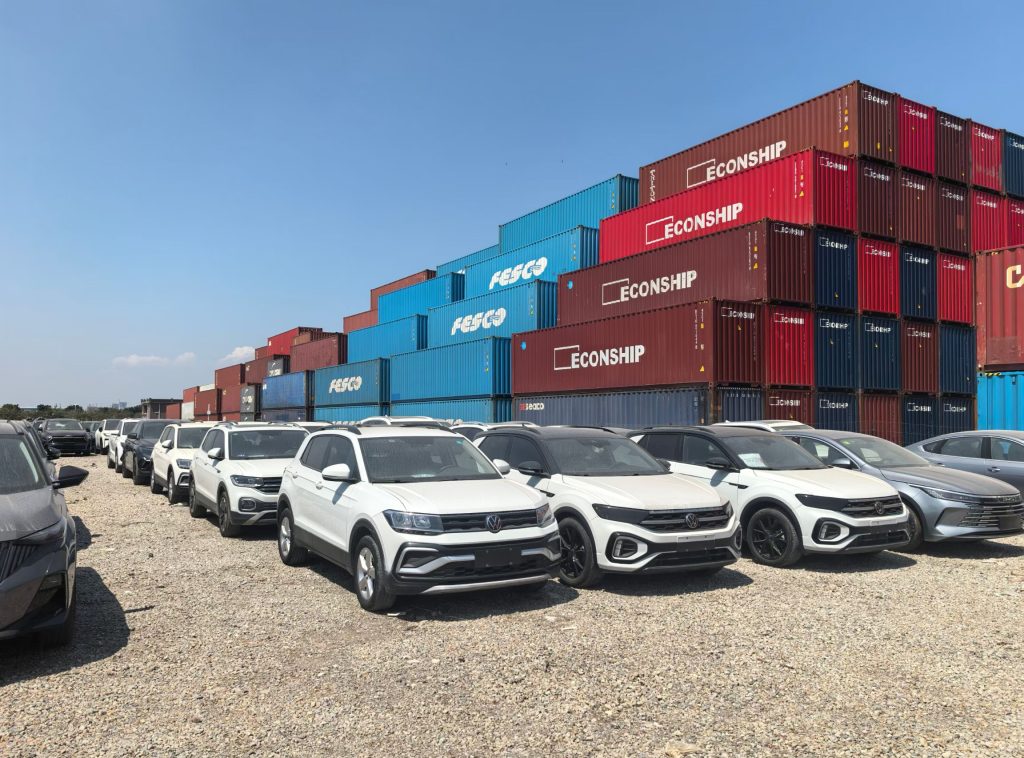
Why Import Used Electric Cars from China?
China has the world’s largest electric vehicle industry and one of the world’s most competitive EV markets.
According to the International Energy Agency’s Global EV Outlook 2026, China accounted for nearly 75% of global electric car production in 2025. Chinese electric vehicle exports also exceeded 2.5 million units during the year.
At the same time, China’s domestic used EV market is expanding rapidly. The IEA reported that sales of used electric cars in China exceeded 1.5 million units in 2025.
This creates a large sourcing market for overseas buyers.
Some of the main reasons international buyers choose used EVs from China include:
- Lower purchase prices compared with many new vehicles
- Large selection of EV, PHEV and EREV models
- Relatively young vehicle age
- Modern batteries and electric powertrains
- High equipment levels
- Large supply from Chinese EV brands
- More choices for dealers, fleets and taxi businesses
- Access to brands such as BYD, Li Auto, GAC AION, NETA, Leapmotor, Zeekr, Geely, Changan, Dongfeng and others
For buyers who understand how to inspect and source vehicles correctly, the Chinese used EV market can offer excellent value.
Step 1: Confirm Your Country’s Used EV Import Regulations
Before choosing a vehicle, the first thing you should check is whether the vehicle can legally be imported and registered in your country.
Import regulations can differ significantly between countries.
Depending on the destination, authorities may impose requirements relating to:
Vehicle age
Some countries limit the maximum age of imported used vehicles.
Left-hand drive or right-hand drive
The steering position can be important for registration.
Vehicle safety standards
Certain countries require specific safety certifications or inspections.
Battery electric vehicle regulations
EVs may have different customs classifications, taxes or technical requirements compared with gasoline vehicles.
Import duties and taxes
Customs duty, VAT, excise tax and other charges vary by destination.
Charging standards
Chinese-market EVs may use GB/T charging connectors, while the destination country may primarily use CCS2, Type 2, CHAdeMO or another charging standard.
Homologation and registration
Some markets require additional certification before a vehicle can be registered locally.
Therefore, always confirm the current regulations with a professional customs broker or relevant government authority in your country before placing an order.
Step 2: Determine What Type of Electric Vehicle You Need
Not every EV is suitable for every market.
Before contacting a Chinese used EV supplier, determine how the vehicle will be used.
Battery Electric Vehicle — BEV
A BEV runs entirely on electricity.
Popular examples include:
BYD Yuan Plus, BYD Seagull, GAC AION models, NETA U, Leapmotor T03 and many other Chinese EVs.
BEVs can be a good option when charging infrastructure is readily available.
They are particularly attractive for:
- City driving
- Taxi fleets
- Ride-hailing
- Daily commuting
- Company fleets
Plug-in Hybrid Electric Vehicle — PHEV
A PHEV combines a gasoline engine with a rechargeable battery.
It can drive a certain distance using electricity before using the engine.
PHEVs may be more practical for buyers who want lower fuel consumption but do not yet have access to a mature public charging network.
Extended-Range Electric Vehicle — EREV
An EREV primarily uses an electric motor to drive the vehicle, while an internal combustion engine generates electricity when needed.
Models from brands such as Li Auto are popular examples of this technology.
EREVs can be especially attractive for markets where buyers want the driving experience of an EV but are concerned about long-distance charging availability.
Step 3: Find a Reliable Used EV Exporter in China
Choosing the right exporter is one of the most important parts of the transaction.
A professional used car exporter should not simply send you a few pictures and a price.
The supplier should be able to clearly identify the specific vehicle being offered.
Before paying for a vehicle, ask the exporter to provide information such as:
- Full vehicle model and version
- Model year
- First registration date
- Mileage
- VIN
- Exterior and interior condition
- Accident or repair history if available
- Battery information
- Real photos
- Real vehicle video
- Undercarriage or chassis photos when necessary
- Export eligibility
- Available documents
Be cautious when a supplier offers an unusually low price but cannot clearly explain the vehicle’s mileage, condition or history.
When buying a used vehicle, the cheapest vehicle is not always the lowest-cost vehicle in the long term.
Step 4: Choose the Right Used EV
After determining your budget and vehicle category, your exporter can begin sourcing suitable vehicles.
China’s used car market is very large, and even two vehicles with the same model year and version can have different prices.
For example, two identical-looking BYD vehicles may have different values because of differences in:
Mileage
A vehicle with 30,000 km will normally be valued differently from one with 150,000 km.
Battery condition
Battery health can affect both driving range and resale value.
Accident history
Structural accident repairs can significantly affect vehicle value.
Paintwork
A vehicle with one repainted panel is very different from a vehicle that has undergone major collision repairs.
Ownership and usage history
A privately owned vehicle may have experienced very different usage compared with a taxi or ride-hailing vehicle.
Configuration
Wheel size, seat functions, cameras, panoramic roofs, infotainment systems and other equipment can vary by trim.
This is why professional sourcing should compare condition, mileage, configuration and price together, rather than looking only at the lowest advertised price.
Step 5: Inspect the Vehicle Before Purchase
Used vehicle inspection is particularly important when purchasing remotely.
International buyers usually cannot personally inspect every vehicle in China, so detailed inspection information becomes extremely valuable.
A good inspection should cover several areas.
Exterior Inspection
Check:
- Front and rear bumpers
- Doors
- Hood
- Roof
- Fenders
- Trunk
- Glass
- Lights
- Paint condition
- Panel gaps
- Wheels and tires
Signs of paint repair should be documented whenever possible.
Interior Inspection
Check:
- Seats
- Dashboard
- Steering wheel
- Displays
- Air conditioning
- Cameras
- Power windows
- Charging equipment
- Infotainment system
- Seat adjustment functions
For high-specification vehicles, also confirm features such as seat heating, ventilation, massage, HUD or panoramic roof individually.
Never assume that every vehicle of the same model has identical equipment.
Chassis Inspection
The underside of the vehicle should be checked for:
- Structural damage
- Severe corrosion
- Battery pack damage
- Suspension damage
- Fluid leakage
- Signs of major impact
For electric cars, the condition of the battery enclosure is particularly important.
Step 6: Check the EV Battery
The battery is one of the most important components of a used electric vehicle.
A car may look excellent externally while its battery has experienced substantial degradation or abnormal usage.
Important battery-related information may include:
Battery Capacity
Measured in kWh, battery capacity helps determine the vehicle’s potential driving range.
Battery Type
Many Chinese EVs use either:
LFP — Lithium Iron Phosphate
or
NMC — Nickel Manganese Cobalt
Each chemistry has different characteristics.
Battery SOH
SOH stands for State of Health.
It represents the battery’s remaining condition relative to its original performance.
However, SOH data is not always directly available for every Chinese EV model, so buyers should not expect an exact SOH percentage in every transaction.
Where available, diagnostic information can provide additional confidence.
Charging Test
It is also useful to confirm whether the vehicle can charge correctly.
Check:
- AC charging
- DC fast charging
- Charging port condition
- Charging errors
Step 7: Understand China’s 2026 EV Export Rules
China introduced additional vehicle export requirements for 2026.
From January 1, 2026, pure electric passenger vehicles became subject to export license administration in China.
China has also strengthened controls designed to prevent new vehicles from being exported improperly as used vehicles.
For vehicles with a registration period of 180 days or less, additional manufacturer-issued after-sales service confirmation may be required when applying for export, and vehicles without the required documentation may not receive an export license.
For overseas buyers, this means that working with an experienced exporter is increasingly important.
The exporter should verify that the specific vehicle can legally complete the Chinese export process before final shipment.
Step 8: Confirm the Vehicle Price and Trade Terms
Before making payment, make sure you understand exactly what the quoted price includes.
Common international trade terms include:
EXW — Ex Works
EXW generally refers to the vehicle price at the seller’s location or agreed delivery point in China.
International transportation is not included unless otherwise agreed.
FOB — Free on Board
FOB generally includes the agreed costs required to deliver and load the vehicle for export at the specified port, according to the agreed Incoterms conditions.
CIF — Cost, Insurance and Freight
CIF normally includes the agreed cost of the goods, insurance and freight to the destination port under the applicable Incoterms conditions.
However, vehicle transactions can involve different local charges and logistics arrangements.
Always ask the supplier to clearly state:
EXW price? FOB price? CIF price?
Do not assume that a quotation automatically includes shipping.
Step 9: Sign a Purchase Contract
A professional transaction should include a written sales or purchase contract.
The contract should clearly identify the vehicle and transaction.
Important information can include:
- Seller information
- Buyer information
- Vehicle brand
- Vehicle model and version
- VIN
- Mileage
- First registration date
- Vehicle condition
- Purchase price
- Payment terms
- Delivery terms
- Inspection rights
- Responsibilities of both parties
For used vehicles, it is especially important to describe known vehicle condition accurately.
If a vehicle has repainting, repaired panels or other known issues, they should be communicated before final purchase whenever possible.
Step 10: Arrange Payment Safely
Payment terms differ between suppliers and transactions.
For vehicles that must be sourced specifically for a buyer, an initial deposit may be required to reserve or purchase the vehicle.
Before transferring money, verify:
- Supplier company information
- Bank account information
- Vehicle details
- Contract
- Payment amount
- Currency
- Remaining balance
- Payment deadline
Avoid sending money to unrelated personal accounts unless there is a clear and legitimate reason and the arrangement has been independently verified.
For B2B transactions, company-to-company documentation generally provides better traceability.
Step 11: Prepare Export Documents
The exact documentation depends on the vehicle, exporter, port and destination country.
Documents commonly involved in an international used vehicle transaction may include:
- Commercial invoice
- Sales contract
- Packing or shipment information
- Vehicle registration-related documents
- Export declaration documents
- Export license where applicable
- Bill of lading after shipment
- Other certificates required by the destination market
The buyer should also confirm which original documents will be required for customs clearance and vehicle registration in the destination country.
Never wait until the vehicle reaches the destination port to check registration requirements.
Step 12: Choose a Shipping Method
Used electric vehicles are typically transported internationally using several methods.
RoRo Shipping
RoRo means Roll-on/Roll-off.
Vehicles are driven onto a specialized car carrier and secured for transportation.
Advantages can include:
- Efficient handling
- No individual container required
- Suitable for vehicle transportation
- Competitive cost on certain routes
Availability depends on the destination port and shipping schedule.
Container Shipping
Vehicles can also be transported inside shipping containers.
Depending on vehicle dimensions and loading arrangements, more than one vehicle may sometimes be loaded into a container.
Container shipping can be useful when:
- RoRo service is unavailable
- Several vehicles are shipped together
- The destination requires a particular logistics route
Combined Sea and Land Transportation
For landlocked countries, transportation may involve:
China → destination seaport → inland transportation
Therefore, buyers should consider the complete logistics route rather than only the ocean freight cost.
Step 13: Check Charging Compatibility
One of the most overlooked issues when importing a Chinese-market EV is charging compatibility.
Many domestic Chinese electric vehicles use the GB/T charging standard.
Your country may use another standard.
Before purchasing, confirm:
- Vehicle AC charging connector
- Vehicle DC fast-charging connector
- Local charging network
- Home charging requirements
- Voltage compatibility
- Whether an adapter is available
- Whether the adapter supports AC or DC charging
AC charging adapters are usually simpler than DC fast-charging solutions.
Do not assume one adapter will solve every charging compatibility issue.
Step 14: Understand the Total Import Cost
The vehicle purchase price is only one part of the final cost.
A complete import budget may include:
Vehicle purchase price
China-side handling or export costs
Domestic transportation to the port
Ocean or international freight
Insurance
Destination port charges
Import duty
VAT or other taxes
Customs broker fee
Inland transportation
Registration costs
The exact calculation depends heavily on the destination country.
When comparing suppliers, compare the same quotation basis.
A USD 8,000 EXW quotation cannot be directly compared with a USD 9,000 FOB quotation without calculating the costs included in each offer.
Common Mistakes When Importing Used EVs from China
Many first-time buyers focus too much on price.
Some of the most common mistakes include:
Choosing the cheapest vehicle without checking its condition
Extremely low prices often have a reason.
Ignoring battery condition
Mileage alone cannot tell you everything about an electric vehicle.
Not checking the exact vehicle version
Chinese vehicles can have many trim levels with different batteries, ranges and configurations.
Assuming advertised driving range equals real-world range
Official range ratings are measured under standardized testing conditions. Actual range varies according to battery health, temperature, driving speed, road conditions, air-conditioning use and driving style.
Ignoring charging compatibility
A vehicle is much less useful if it cannot conveniently use your local charging network.
Not confirming import regulations before payment
The vehicle may be exportable from China but still face restrictions in the destination country.
Buying without real photos or videos
Stock photos should never replace actual vehicle verification when purchasing a used car.
Final Thoughts
Importing a used electric car from China can be an excellent way to access modern EV technology at a competitive cost.
However, successful sourcing requires more than finding a low advertised price.
A professional buyer should evaluate:
Vehicle condition → Battery → Mileage → History → Configuration → Export eligibility → Charging compatibility → Documentation → Shipping → Import cost
When these factors are checked carefully, used Chinese electric vehicles can provide attractive opportunities for private buyers, dealers, taxi companies and fleet operators around the world.